DeWater® Sand Trap
Grit System
PEWE DeWater® ST
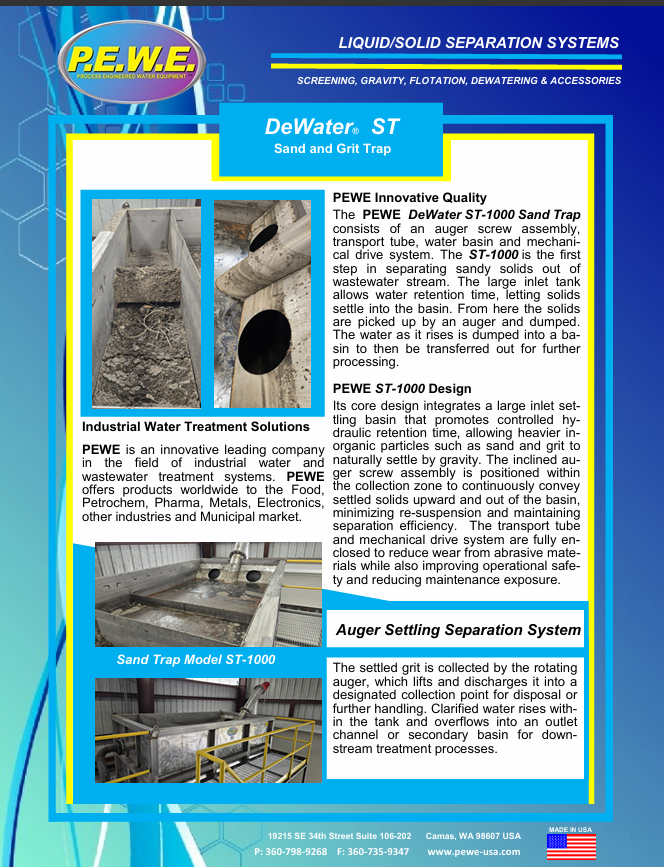
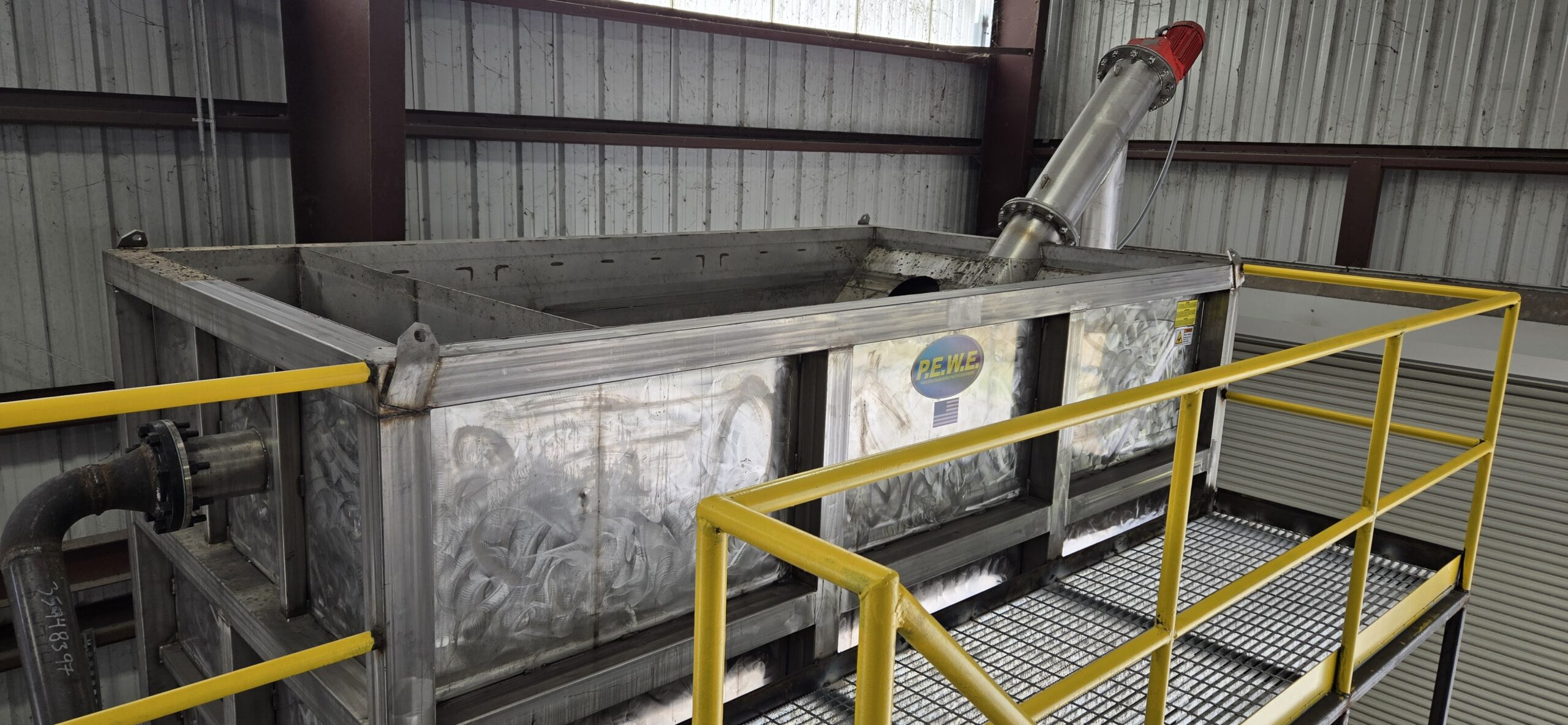
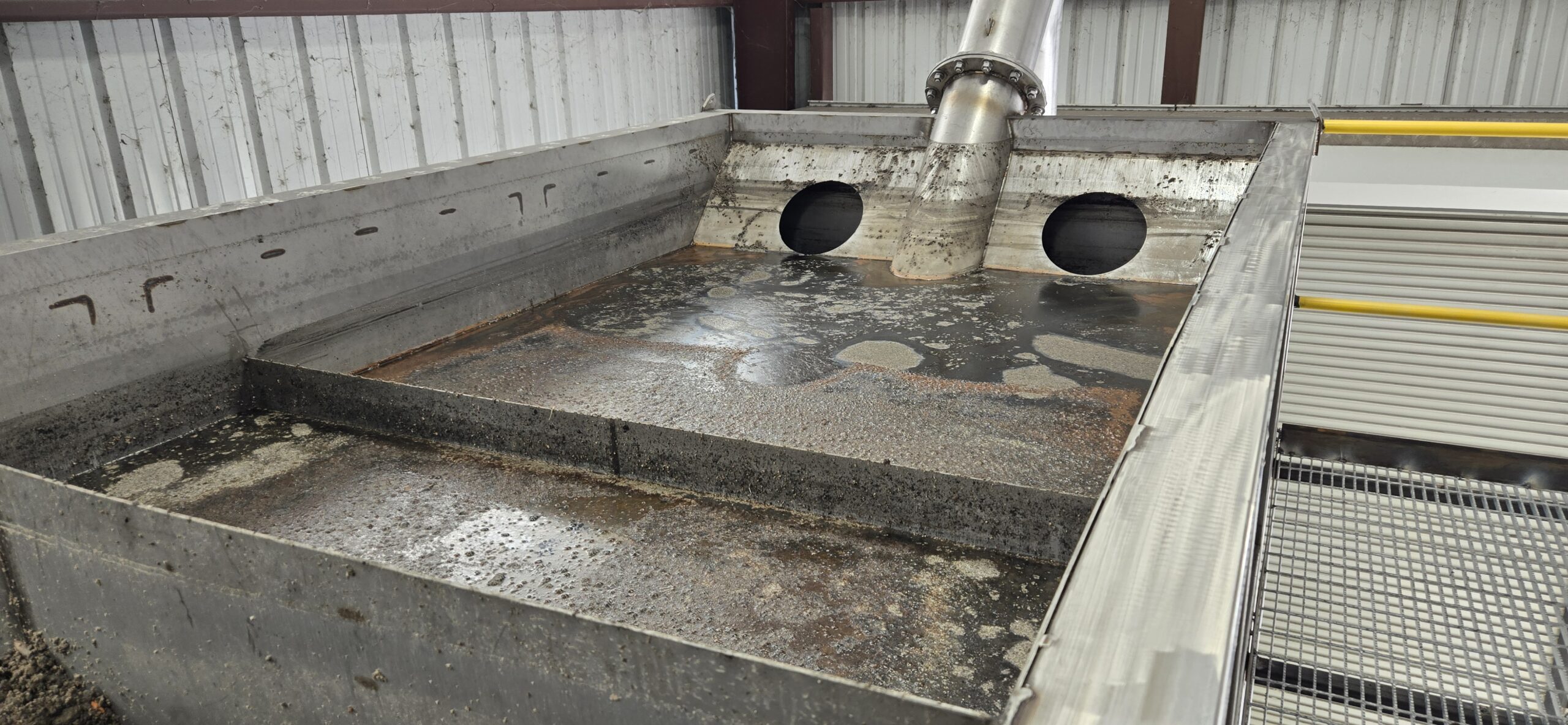
The PEWE DeWater® ST-1000 Sand Trap consists of an auger screw assembly, transport tube, water basin and mechanical drive system. The ST-1000 is the first step in separating sandy solids out of wastewater stream. The large inlet tank allows water retention time, letting solids settle into the basin. From here the solids are picked up by an auger and dumped. The water as it rises is dumped into a basin to then be transferred out for further processing.
DeWater® ST Design
The PEWE DeWater® ST-1000 Sand Trap is engineered as a robust preliminary solids separation system designed to handle high grit and sand loading in wastewater streams. Its core design integrates a large inlet settling basin that promotes controlled hydraulic retention time, allowing heavier inorganic particles such as sand and grit to naturally settle by gravity. The inclined auger screw assembly is positioned within the collection zone to continuously convey settled solids upward and out of the basin, minimizing re-suspension and maintaining separation efficiency. The transport tube and mechanical drive system are fully enclosed to reduce wear from abrasive materials while also improving operational safety and reducing maintenance exposure. Overall, the design emphasizes simplicity, durability, and continuous duty operation in demanding wastewater environments. The ST-1000 may be ordered with a PEWE Command Control® RX panel.
DeWater® ST Operation
During operation, influent wastewater enters the ST-1000 inlet tank where flow velocity is reduced to create ideal conditions for sedimentation. As the water moves through the basin, sand and other heavy solids settle to the bottom while lighter suspended material remains in the water column. The settled grit is collected by the rotating auger, which lifts and discharges it into a designated collection point for disposal or further handling. Clarified water rises within the tank and overflows into an outlet channel or secondary basin for downstream treatment processes. The system operates continuously, ensuring consistent removal of abrasive solids and protecting downstream equipment from excessive wear and tear.